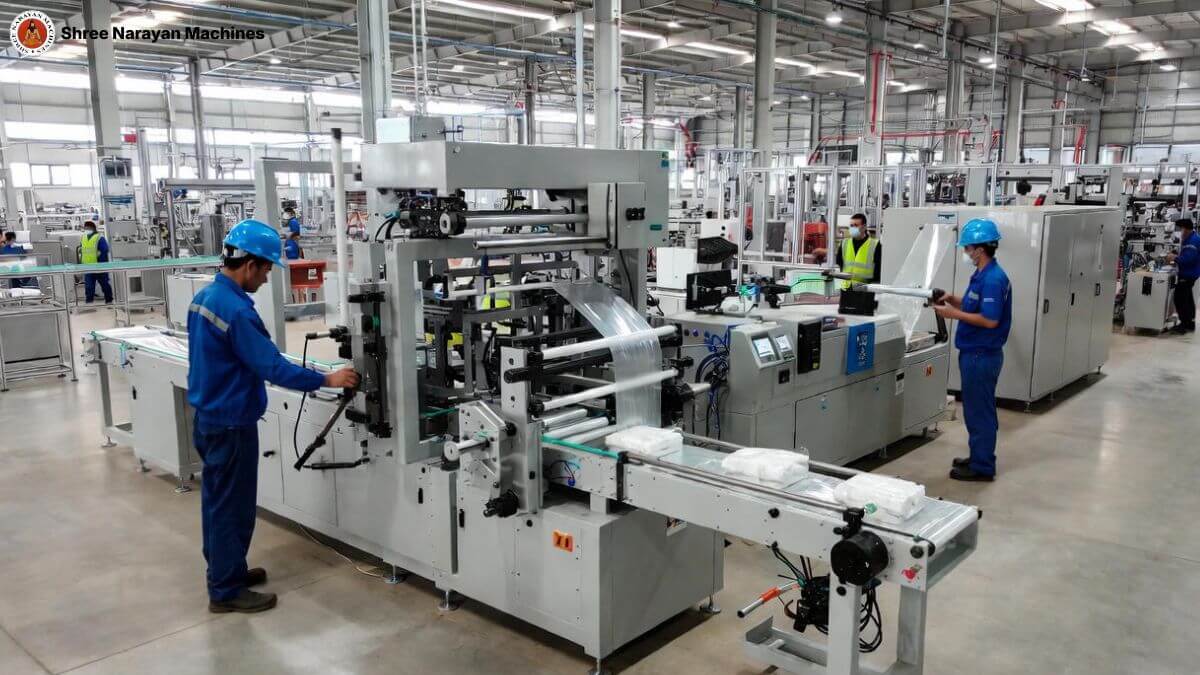

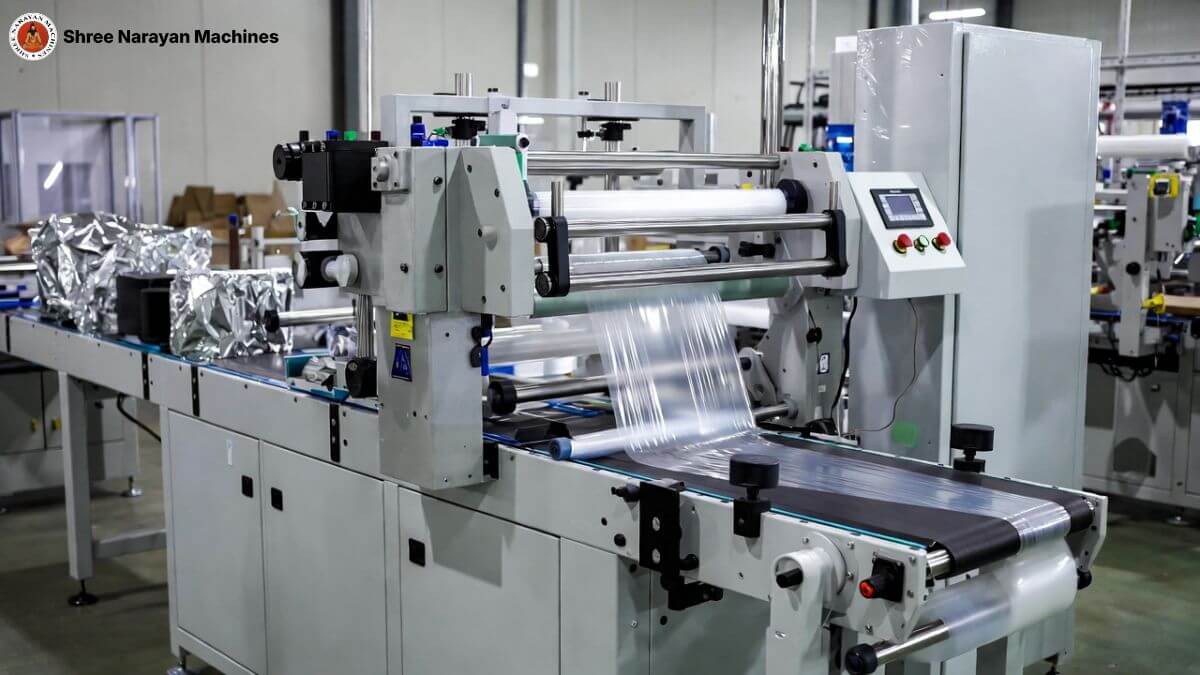
In the fast-evolving world of packaging, flow wrap machines have become essential for businesses seeking speed, hygiene, and consistency. Whether you’re in food, pharmaceuticals, or FMCG, choosing the best flow wrap machine can dramatically improve your production efficiency and product presentation.
What Is a Flow Wrap Machine?
A flow wrap machine (also known as a horizontal form-fill-seal machine) wraps products in a continuous film, sealing them on three sides. It’s ideal for items like biscuits, soaps, syringes, and hardware.
Key Benefits:
- High-speed packaging: Up to 300 packs/min depending on model
- Hygienic sealing: Protects against moisture, dust, and contamination
- Professional appearance: Uniform, tamper-proof packaging
- Versatile use: Suitable for food, pharma, cosmetics, and industrial goods
Features to Look for in the Best Flow Wrap Machine
| Feature | Description | Why It Matters |
|---|---|---|
| Servo-driven system | Precision control over speed and film tension | Ensures consistent sealing and reduces waste |
| Touchscreen HMI | User-friendly interface for settings and diagnostics | Improves operator efficiency |
| Adjustable forming box | Accommodates different product sizes | Enhances flexibility across SKUs |
| Stainless steel body | Corrosion-resistant and hygienic | Ideal for food and pharma industries |
| Automatic film tracking | Keeps film aligned during high-speed runs | Reduces downtime and rejects |
Top Flow Wrap Machine Brands in 2026
- Shree Narayan Machines (India) – Known for best grade flow wrap machines
- PFM (Italy) – Offers high-speed food packaging systems
- ULMA (Spain) – Specializes in modular, eco-friendly designs
- AIPAK (China) – Affordable and reliable for SMEs
- Omori (Japan) – Precision engineering for delicate products
These brands are recognized globally for their innovation and reliability in packaging automation.
Types of Flow Wrap Machines (overview)
- Horizontal Flow Wrapper (HFFS) — Products are fed horizontally into a film tube; ideal for solid items like bakery goods, bars, and medical devices. It forms a longitudinal seal and end seals in a continuous flow. Best for rigid/rectangular products and high hygiene needs.
- Vertical Flow Wrapper (VFFS) — Film is formed vertically and product is dropped into the film tube from above; commonly used for granular, powdered, or free‑flowing products (snacks, pulses). Often called vertical form‑fill‑seal in packaging literature. Best for bulk/loose products and easy integration with weighers.
- Rotary / Continuous Flow Wrapper — Uses a rotary sealing and cutting station to achieve very high speeds and smooth continuous motion; suited to high‑volume production lines (confectionery, biscuits). Best for very high throughput and compact layouts.
- Intermittent / Indexing Flow Wrapper — Operates in short cycles (indexing motion) rather than fully continuous rotary action; useful when precise product positioning or intermittent feeding is required.
- Specialized Variants
- Multi‑lane flow wrappers — multiple parallel lanes to wrap many small items simultaneously (e.g., candies).
- Pillow pack, fin‑seal, lap‑seal formats — different sealing styles produced by the same wrapper family depending on forming box and sealer configuration.
- High‑speed / servo‑driven models — for demanding production rates and precise film handling.
Quick comparison table
| Type | Orientation | Typical products | Strength |
|---|---|---|---|
| Horizontal Flow Wrapper (HFFS) | Horizontal | Bakery, bars, medical devices | Hygiene; neat presentation. |
| Vertical Flow Wrapper (VFFS) | Vertical | Snacks, powders, granules | Good for free‑flowing products. |
| Rotary / Continuous | Horizontal (rotary station) | Confectionery, biscuits | Very high speed; compact. |
| Intermittent / Indexing | Horizontal | Irregular shapes, precise feed | Precise positioning; flexible. |
How to Choose?
- Product form: solids/rigid → HFFS; powders/granules → VFFS.
- Throughput needs: very high volumes → rotary/continuous; moderate/variable → intermittent or servo HFFS.
- Packaging style: pillow/fin/lap seals determine forming box and sealer choice.
Risks & practical notes
- Film compatibility and sealing method must match product (heat‑sensitive items may need cold‑seal).
- Integration with upstream feeders, weighers, or inspection systems affects machine selection and ROI.
Frequently Asked Questions (FAQs) — Best Flow Wrap Machine in 2026
Que 1. What is a flow wrap machine?
Ans: A machine that forms, fills, seals, and cuts packages from continuous film.
Que 2. HFFS or VFFS — which should I pick?
Ans: HFFS for solid/rigid items (bars, bakery); VFFS for free‑flowing powders/granules.
Que 3. Are servo drives necessary in 2026?
Ans: Yes for precision film control, faster changeovers, and reduced scrap.
Que 4. What throughput ranges are typical?
Ans: Small HFFS: tens–hundreds packs/min; rotary: several hundreds–thousands/min depending on lanes.
Que 5. Can machines handle biodegradable films?
Ans: Many modern machines support biodegradable or recyclable films if sealing parameters match.
Que 6. What maintenance is typical?
Ans: Regular lubrication, seal jaw checks, film path cleaning, and software updates.
Buying checklist & risks
- Define product specs (dimensions, fragility, film type). Ask vendors for demo runs.
- Risk: buying undersized throughput or incompatible film handling leads to downtime and waste. Mitigate by trial runs and service contracts.
Conclusion
Choosing the best flow wrap machine in 2025 means balancing speed, hygiene, flexibility, and sustainability. Whether you’re packaging biscuits, syringes, or soaps, investing in a high-quality machine from a trusted brand ensures long-term ROI and operational excellence.