
Packaging is the backbone of modern manufacturing, ensuring products reach consumers safely, hygienically, and attractively. Among the most versatile packaging solutions is the flow wrap machine. But how does flow wrap machine work? In this guide, we’ll break down the process step by step, highlight industry applications, and explain why flow wrap machines are essential for businesses in food packaging, pharmaceuticals, FMCG, and industrial goods.
What Is a Flow Wrap Machine?
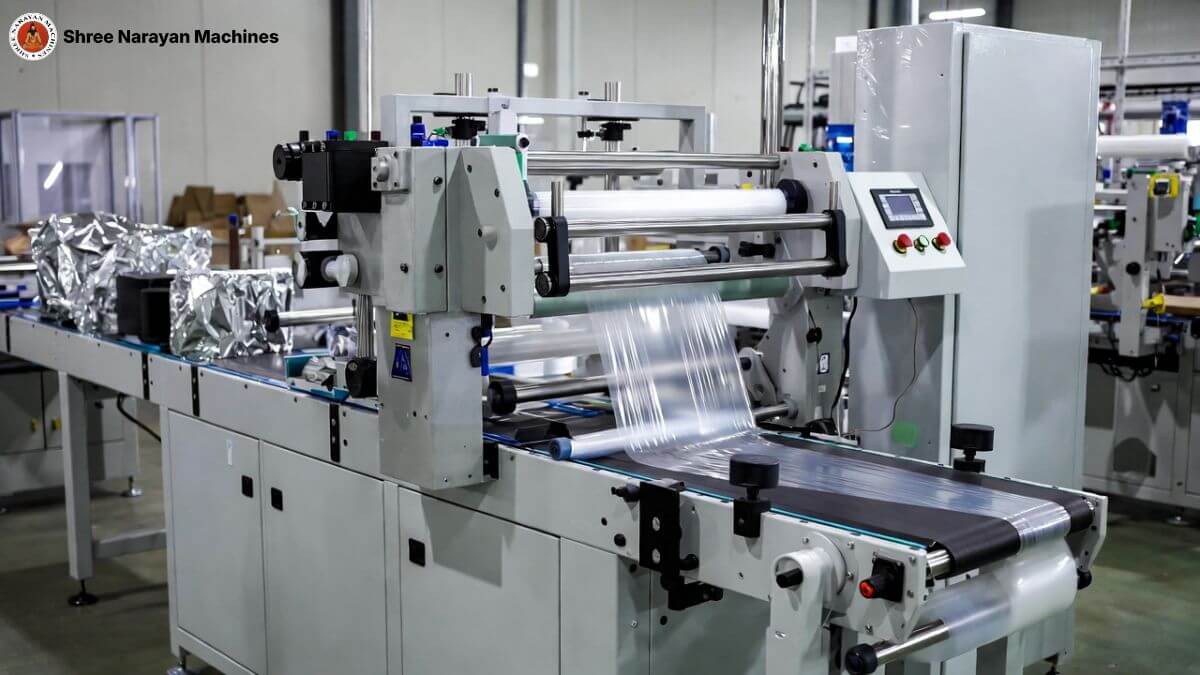
A flow wrap machine—also called a horizontal form-fill-seal machine—wraps products in a continuous film, sealing them on three sides. It’s widely used for biscuits, chocolates, soaps, syringes, and even hardware items.
Key Benefits:
- High-speed packaging: Up to hundreds of packs per minute
- Hygienic sealing: Protects against contamination, moisture, and dust
- Professional appearance: Uniform, tamper-proof packaging
- Versatility: Works across multiple industries and product sizes
Step-by-Step Process: How a Flow Wrap Machine Works
| Step | Process | Why It Matters |
|---|---|---|
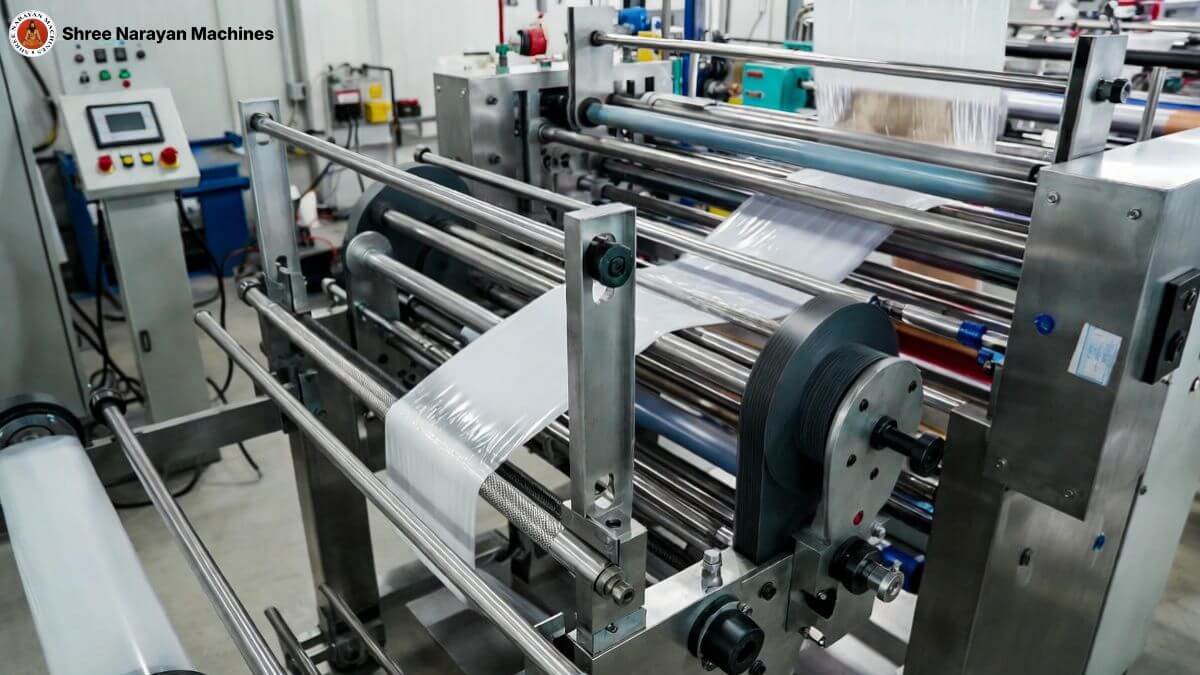
| Film Feeding | A roll of packaging film is loaded and fed into the machine | Provides the wrapping material |
| Product Feeding | Products are placed on a conveyor belt and guided into position | Ensures smooth, continuous flow |
| Forming & Wrapping | The film is folded around the product using a forming box | Creates the protective wrap |
| Sealing | Heat-sealing jaws close the film at the ends and along the length | Ensures airtight, tamper-proof packaging |
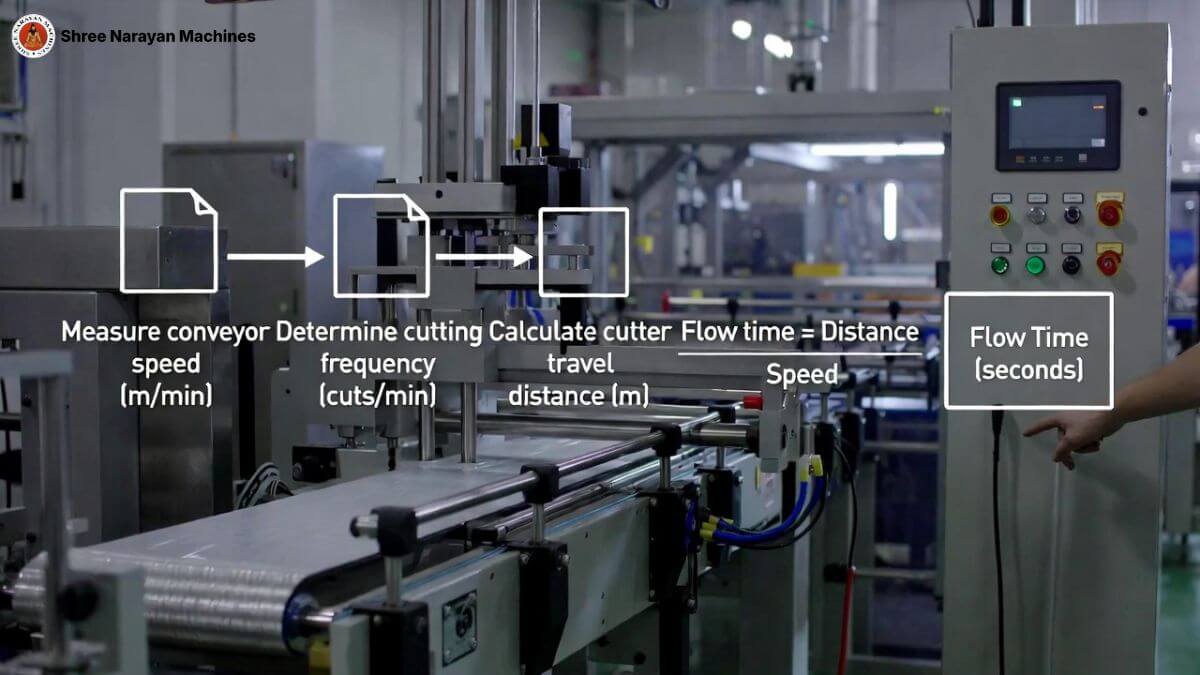
| Cutting | Rotary knives cut individual packs from the continuous film | Produces uniform, ready-to-sell packages |
| Discharge | Finished packs exit onto a conveyor for collection | Streamlines production for bulk output |
Industry Applications
- Food Packaging: Biscuits, chocolates, bread, frozen items
- Pharmaceuticals: Syringes, tablets, medical devices
- Cosmetics & FMCG: Soaps, shampoos, personal care products
- Industrial Goods: Hardware, cables, and small tools
Frequently Asked Questions (FAQs)
Que 1. How does a flow wrap machine work?
Ans: A flow wrap machine works by feeding film, wrapping products, sealing edges, cutting packs, and discharging finished packages.
Que 2. What industries use flow wrap machines?
Ans: Industries like food packaging, pharmaceuticals, FMCG, cosmetics, and industrial goods rely on flow wrap machines for efficiency.
Que 3. What are the main parts of a flow wrap machine?
Ans: Key parts include the film roll, forming box, sealing jaws, rotary knives, and conveyor system.
Que 4. What is the difference between horizontal and vertical flow wrap machines?
Ans: A horizontal flow wrap machine wraps products lying flat, while a vertical machine is better for upright packaging.
Que 5. Can flow wrap machines handle eco-friendly packaging films?
Ans: Yes, modern machines are designed to work with biodegradable and recyclable films, supporting sustainable packaging.
Que 6. Why is sealing temperature important in flow wrap machines?
Ans: Correct sealing temperature ensures airtight, tamper-proof packaging without damaging the film or product.
Also Read: How To Adjust Flow Wrap Machine Work– Step-by-Step Guide for Smooth Packaging
Conclusion
A flow wrap machine works by feeding film, wrapping products, sealing, cutting, and discharging finished packs—all in one continuous process. This makes it indispensable for industries that demand speed, hygiene, and efficiency. By understanding how it works, businesses can optimize their packaging lines and choose the right machine for their needs.
👉 Whether you’re packaging biscuits, syringes, or industrial goods, mastering the flow wrap machine working principle ensures consistent quality and long-term success.