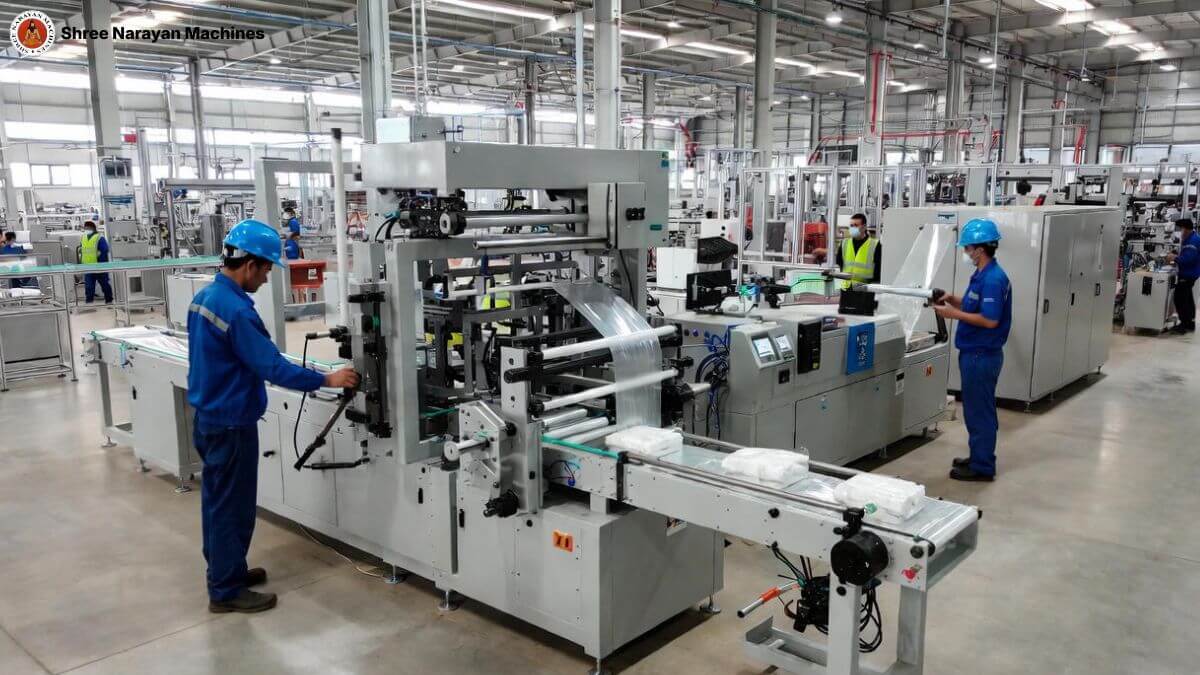

A pouch packing machine is the backbone of modern packaging lines for snacks, powders, liquids, and many FMCG products. Correct operation preserves product quality, reduces waste, and keeps production running safely and efficiently. This guide explains practical, production‑ready steps for operating a pouch packing machine, covering pre‑start checks, step‑by‑step operation, quality control, troubleshooting, maintenance, and operator training.
Why correct operation matters
Operating a pouch packing machine correctly ensures consistent pouch formation, reliable seals, accurate fills, and compliance with food safety standards. Proper operation reduces downtime, extends equipment life, and protects brand reputation by delivering uniform, tamper‑proof packs.
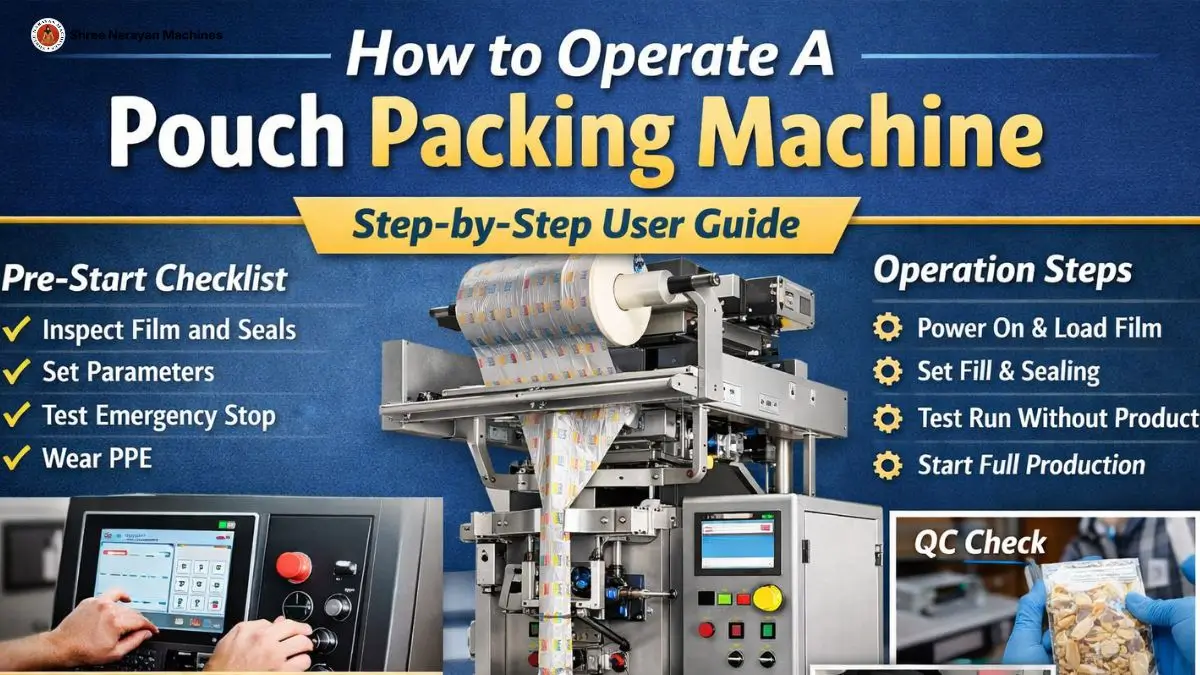
Pre‑start checklist — do this every shift
- Visual inspection of the machine frame, guards, and safety interlocks.
- Film or pouch stock check for correct material, width, and no tears.
- Hopper and product feed verification for cleanliness and free flow.
- Sealing jaws and forming collar cleaned and free of residue.
- Sensors and photoeyes wiped and aligned.
- PLC recipe loaded with pack length, seal temperature, and speed.
- Emergency stop and safety guards tested and functional.
- Operator PPE available and worn according to SOPs.
Completing this checklist prevents common start‑up faults and demonstrates operational discipline to auditors and suppliers.
Step‑by‑step operation procedure
- Power up and initialize: Turn on main power, then PLC and servo drives. Allow the system to home and load the saved recipe for the product. Confirm alarms are clear.
- Thread film or load premade pouches: For form‑fill‑seal machines thread the film through the forming collar and tension rollers. For premade pouch packing machines load the pouch magazine and verify pick‑and‑place gripper alignment.
- Set process parameters: Enter pack length, fill volume, sealing temperature, dwell time, and line speed on the HMI. Use the saved recipe as baseline and adjust conservatively for first runs.
- Dry run without product: Run the machine at low speed to verify film tracking, longitudinal seal, and transverse cut. Inspect sample pouches for correct dimensions and seal appearance.
- Introduce product and sample: Feed a small batch and inspect the first 10–20 pouches for fill accuracy, seal integrity, and coding. Check date/lot printing and label placement.
- Ramp to production speed: Increase speed gradually while monitoring quality metrics. Maintain a sampling cadence to ensure ongoing compliance.
- Recordkeeping: Log batch number, recipe used, operator name, start time, and any adjustments in the shift log for traceability.
Quality control and sampling
- First article inspection: for seal strength, leak test, and dimensional accuracy.
- In‑line checks: every 15–30 minutes for weight, seal integrity, and film wrinkles.
- Random destructive tests: for seal peel strength and burst pressure.
- Visual inspection: for coding, label alignment, and foreign particles.
- Reject handling: procedure to segregate and record nonconforming packs.
These controls maintain product safety and reduce customer complaints.
Troubleshooting common issues
- Wrinkled film or misformed pouches — reduce film tension, realign forming collar, check film quality.
- Weak or cold seals — increase sealing temperature or dwell time, clean sealing jaws, inspect heating elements.
- Overfills or underfills — recalibrate dosing system, check hopper flow and vibrator settings.
- Pouch jams or misfeeds — clear magazine, inspect pick‑and‑place grippers, verify sensor alignment.
- Inconsistent film tracking — check rollers, replace worn bearings, verify servo tuning.
Document each fault and corrective action to build a troubleshooting knowledge base for operators.
Maintenance, safety, and operator training
- Daily tasks — clean sealing surfaces, check sensors, remove debris.
- Weekly tasks — lubricate bearings, inspect belts, verify heater performance.
- Monthly tasks — validate PLC recipes, test emergency stops, inspect electrical connections.
- Safety — enforce lockout/tagout for maintenance, keep guards in place, and require PPE.
- Training — provide hands‑on training, SOPs, and competency checks for all operators. Maintain training records to demonstrate expertise and trustworthiness to customers and regulators.
Partnering with a reputable packaging machinery supplier India ensures access to genuine spare parts, service support, and operator training programs.
Frequently Asked Questions (FAQs)
Que 1: How often should I sample packs during production?
Ans: Sample every 15–30 minutes and after any parameter change.
Que 2: When should I call service support?
Ans: Call supplier support for repeated electrical faults, servo errors, or mechanical failures beyond routine fixes.
Que 3: Can one operator run multiple machines?
Ans: Only if machines are configured for semi‑automatic operation and the operator is trained to monitor both safely.
Conclusion
Operating a pouch packing machine reliably requires disciplined pre‑start checks, careful parameter setup, routine sampling, prompt troubleshooting, and scheduled maintenance. These practices protect product quality, reduce downtime, and extend equipment life.
Follow these steps to keep your automatic pouch packing machine running efficiently, hygienically, and profitably.