


If you have ever spent an entire evening hand-wrapping chocolates or individually twisting toffees for a market stall, a wedding favor order, or a small candy business — you already understand the problem this guide is here to solve.
Hand-wrapping candy is meditative for the first twenty pieces. By piece fifty, it is tedious. By piece two hundred, it is genuinely painful — for your fingers, your back, and your production timeline. The moment you start calculating how many hours you are spending on packaging versus actually making your product, the case for a small candy wrapping machine becomes impossible to ignore.
But the market for small-scale candy wrapping equipment is crowded, confusing, and full of machines that look identical on the outside but perform very differently in practice. Some machines wrap only one candy shape. Others handle chocolates, toffees, lollipops, and hard candies with a simple adjustment. Some are genuinely plug-and-play for beginners; others require a technical background to operate and maintain.
This is the guide that cuts through all of that. Whether you are a home baker wrapping homemade truffles for a farmers market, a small confectionery business trying to scale up production, or a mid-sized manufacturer looking to add a dedicated wrapping line for a new product — this complete guide covers everything you need to know about small candy wrapping machines: how they work, what types exist, what features matter, what to avoid, and how to choose the right machine for your exact situation.
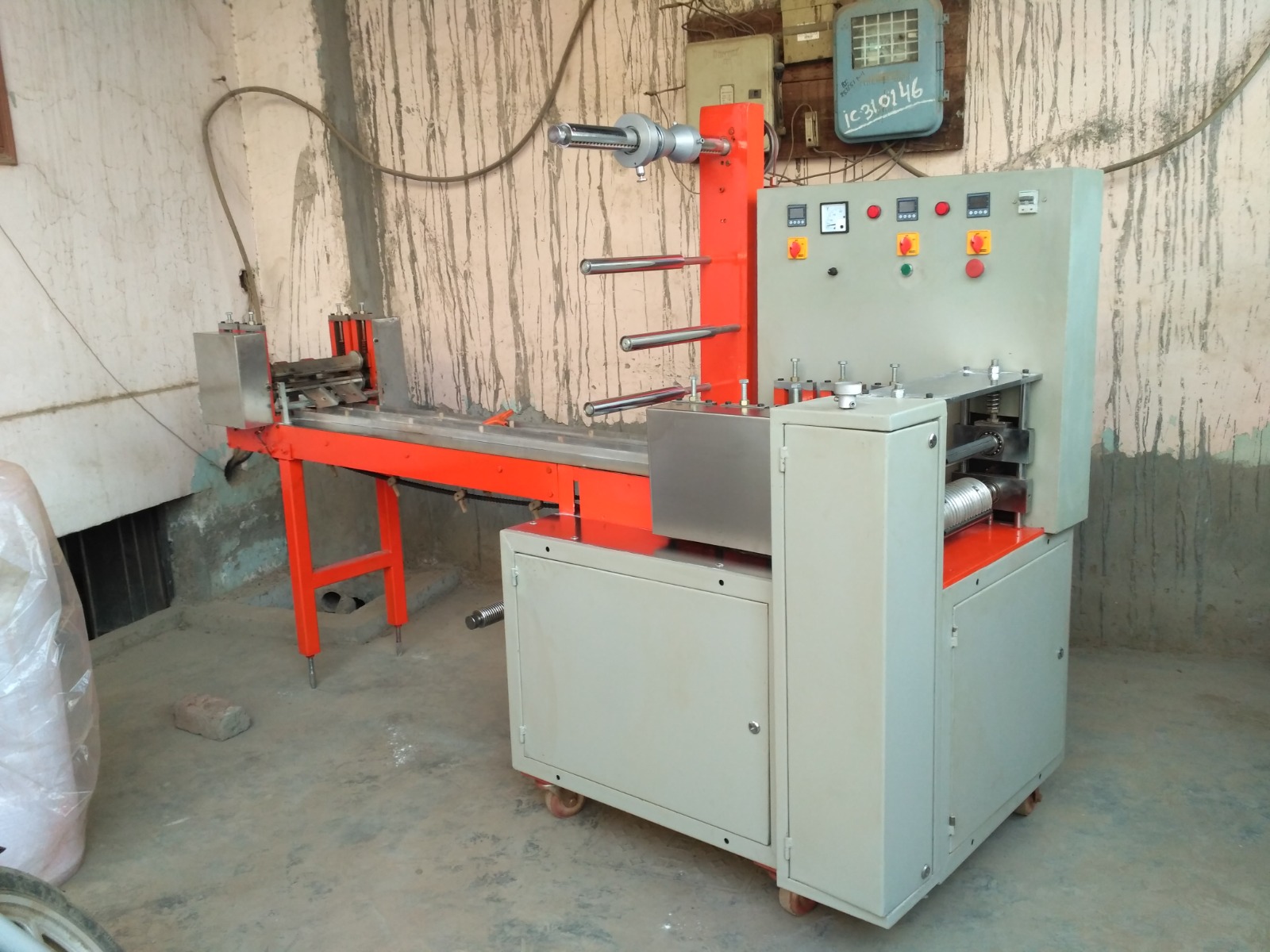
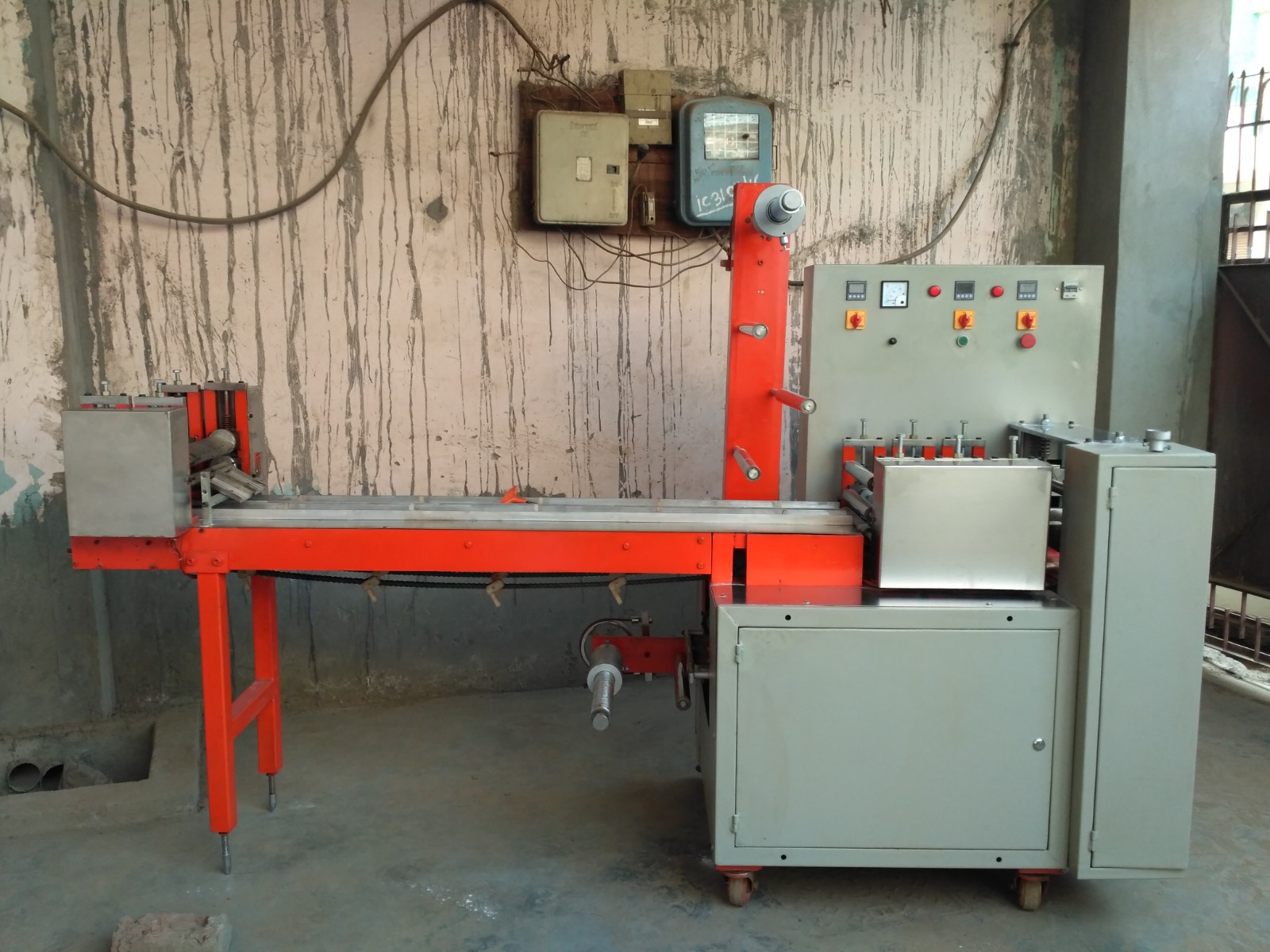
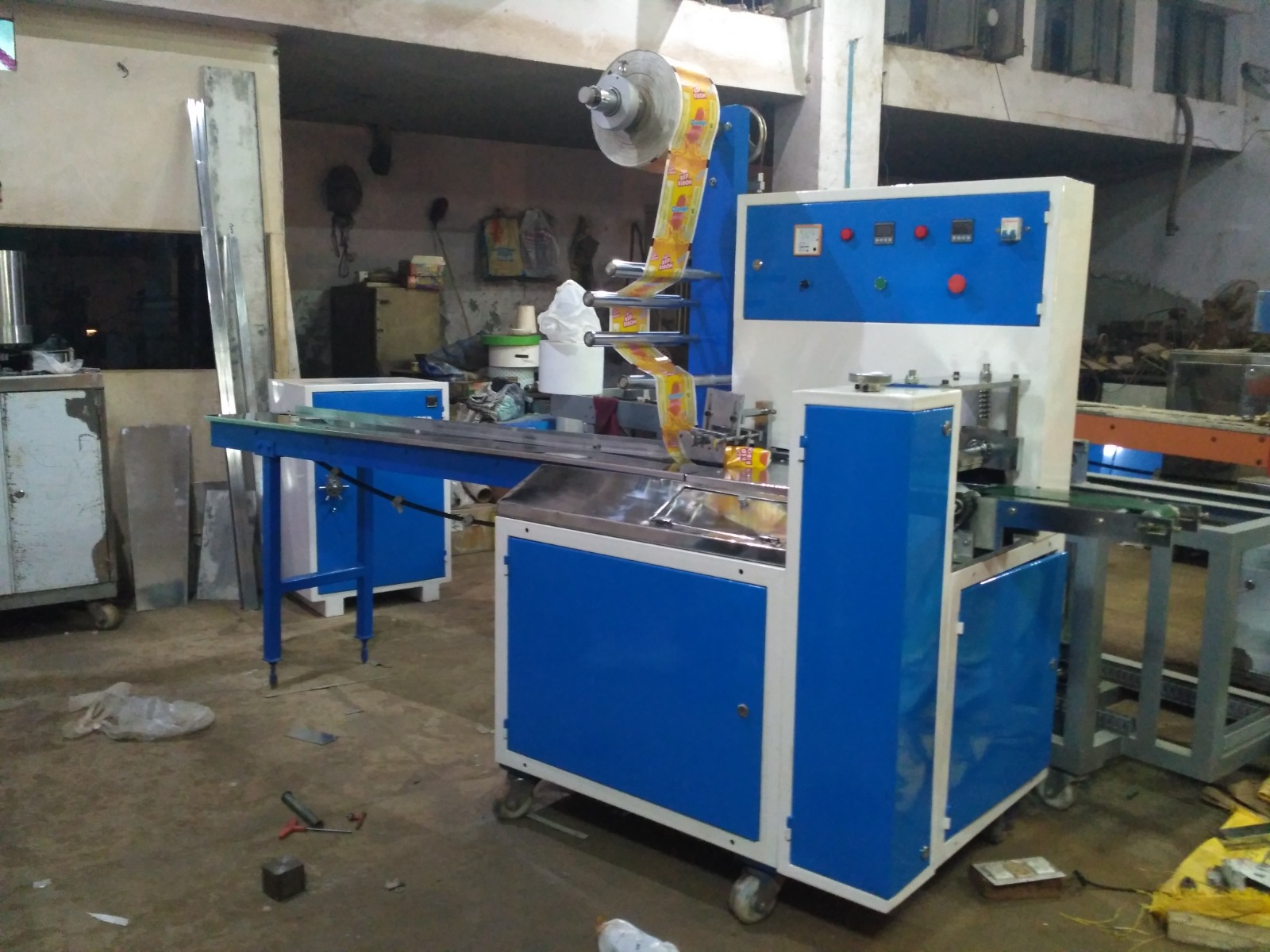
What Is a Small Candy Wrapping Machine ?
A small candy wrapping machine is a compact, semi-automatic or fully automatic packaging device designed to wrap individual pieces of candy — including chocolates, toffees, hard candies, lollipops, caramels, gummies, and similar confections — in foil, wax paper, cellophane, or BOPP (biaxially oriented polypropylene) film.
The term “small” is relative in the packaging equipment industry, but it generally refers to machines that:
- Occupy a countertop or a small floor footprint (typically under 1 square meter)
- Operate at speeds between 20 and 300 pieces per minute (compared to industrial machines running at 1,000+ pieces per minute)
- Are powered by a standard single-phase electrical supply (110V or 220V)
- Are suitable for small businesses, artisan confectioners, home-based candy makers, bakeries, chocolatiers, and cottage industry producers.
Why Invest in a Small Candy Wrapping Machine?
Speed and Volume Even the most basic semi-automatic candy wrapping machine operates at 20–40 pieces per minute — which means 1,200 to 2,400 pieces per hour. A skilled hand-wrapper might manage 200–300 pieces per hour in sustained production. The productivity multiple is immediately obvious. For any candy business taking bulk orders, seasonal holiday orders, or wedding favor commissions, this gap in speed is the difference between profitable fulfillment and exhausting, money-losing manual labor.
Consistency and Presentation Machine-wrapped candy is uniform. Every piece has the same twist tension, the same foil fold, the same label placement. This consistency is not just aesthetic — it is a brand signal. Products that look professionally packaged command higher price points and generate more repeat purchasing than hand-wrapped equivalents, even when the candy inside is identical.
Reduced Labor Cost In small confectionery businesses, packaging is often the most labor-intensive step in production. A wrapping machine allows one person to supervise what would otherwise require two or three people hand-wrapping in parallel. Over the course of a year, this labor saving typically more than justifies the machine’s purchase price.
Hygiene and Food Safety Machine wrapping minimizes direct hand contact with the finished product — an increasingly important factor in commercial food production as hygiene standards rise globally. This is particularly relevant for businesses supplying supermarkets, gift shops, or food service clients who require documented hygiene practices.
Scaling Without Chaos Perhaps the most underappreciated benefit: a wrapping machine allows you to accept larger orders without proportionally expanding your labor. This is the foundation of scaling a confectionery business without burning out.
The Honest Limitations
Upfront Cost Even entry-level candy wrapping machines represent a meaningful investment for home-based or early-stage businesses. The cheapest usable machines start at around $300–$500, and reliable semi-automatic machines for regular business use typically start at $1,500–$3,000.
Product-Specific Compatibility Not every machine wraps every candy. A twist-wrap machine designed for cylindrical toffees will not wrap flat chocolate bars. A pillow-pack machine for hard candies may not handle soft caramels. Matching the machine to your specific product is critical — and getting it wrong is an expensive mistake.
Learning Curve All candy wrapping machines require a setup and calibration period. Film tension, feed speed, cutting alignment, and twist timing all need to be adjusted for your specific candy dimensions and wrapping material. This setup time is real and should not be underestimated by first-time buyers.
Different Types of Small Candy Wrapping Machines
Understanding the different wrapping styles is the most important thing to grasp before buying. The wrong machine type — no matter how high its quality — cannot wrap your product correctly.
1. Twist Wrapping Machines
What they wrap: Cylindrical, oval, or barrel-shaped candies — toffees, caramels, hard candies, boiled sweets, fruit chews, chocolate balls
How they work: The candy is fed (manually or automatically) into the machine, which wraps it in a length of foil or waxed paper and twists both ends tightly — creating the classic “bon-bon” or “cracker” shape that is universally recognized as traditional candy wrapping.
Wrapping speed: Typically 60–200 pieces per minute for semi-automatic models; up to 500+ for fully automatic
Wrapping materials compatible: Aluminum foil, waxed paper, BOPP film, cellophane, moisture-proof paper
Best for: Traditional toffees, caramels, fruit-flavored hard candies, artisan boiled sweets, chocolate truffles (round shape)
Key buying consideration: Twist wrappers are highly candy-shape-specific. Always confirm that the machine’s candy pocket or feeding channel dimensions match your candy’s diameter and length before purchasing.
Popular models in this category:
- GT-800 Twist Wrapping Machine — a widely used entry-level semi-automatic model popular with small confectioners; handles candies in the 10–40mm range; approximately $1,500–$2,500
- ZB-180 Full Automatic Twist Wrapping Machine — fully automatic, 180 pieces per minute; suitable for established small businesses; approximately $5,000–$8,000
2. Fold Wrapping Machines (Envelope Fold / Double Fold)
What they wrap: Flat or rectangular chocolates, chocolate bars, tablet chocolates, pralines, mints, and square/rectangular hard candies
How they work: The candy is wrapped in a flat sheet of foil or paper, which is folded over the top and bottom of the piece in a neat, symmetrical envelope pattern — similar to how a premium chocolate bar is wrapped in foil inside its paper sleeve.
Wrapping speed: Typically 40–150 pieces per minute
Best for: Chocolate bars, tablet chocolates, flat mints, pralines, fudge squares, caramel squares
Key buying consideration: Fold wrapping machines are excellent for chocolate but require precise candy dimensions — the machine is calibrated to a specific height, width, and length range. If your candy comes in multiple sizes, you may need a machine with adjustable molds or multiple candy-size settings.
Two main fold styles:
- Double fold (bundle wrap): Both ends of the wrapping material are folded inward in layered steps, creating a fully sealed package
- Pleat fold: The ends are folded in a fan or pleat pattern, commonly used for chocolate tablets
3. Pillow Pack / Flow Wrap Machines
What they wrap: Virtually any candy shape — round, square, flat, irregular — making this the most versatile wrapping style
How they work: A Horizontal Form Fill Seal (HFFS) machine — commonly called a flow wrap machine or pillow pack machine — feeds candy onto a conveyor, wraps it in a continuous film that is formed into a tube around the product, sealed lengthways, and then cut and sealed at both ends to create a “pillow” or “fin seal” package. The result is a fully enclosed, airtight package similar to how many commercial candies and cookies are packaged.
Wrapping speed: 30–200 pieces per minute for small models
Wrapping materials compatible: BOPP film, CPP film, PE film, laminated film — allowing high-quality printed packaging
Best for: Hard candies, soft candies, gummies, lollipops (with special adaptation), chocolate pieces of irregular shapes, candy bars, protein bars, energy chews
Popular models:
- RZ-180 Mini Flow Wrap Machine — a compact countertop model popular with small businesses; handles products up to 150mm long.
- DXD-180 Horizontal Packaging Machine — slightly larger, higher speed.
4. Lollipop Wrapping Machines
While not strictly “wrapping” machines, candy bagging machines and candy counting machines are closely related and often purchased alongside wrappers by small confectionery businesses.
Candy counting machines use vibration or optical sensors to count precise quantities of individually wrapped candies and deposit them into bags or boxes. They eliminate the tedious and error-prone task of hand-counting.
Candy bagging machines automatically fill pre-formed bags with a set weight or count of candy and seal the bag — ideal for producing retail bags of mixed candy, gummies, or wrapped sweets.
These are particularly valuable for businesses selling mixed candy bags, bulk pick-and-mix products, or portioned gift bags.
5. Candy Bagging and Counting Machines
What they wrap: Lollipops — specifically the stick-on-a-handle format in round, flat, or novelty shapes
How they work: Specialized lollipop wrappers handle the unique challenge of wrapping a product with a protruding stick. The candy head is wrapped in a twist or envelope fold, and the machine accommodates the stick either by routing it through a channel or by wrapping only the head portion.
Wrapping speed: 20–80 pieces per minute for small models
Best for: Artisan lollipop makers, candy shops, children’s party favor producers, festival confectioners
Key consideration: Lollipop wrappers are highly specific to stick diameter and candy head size. Always provide your exact lollipop dimensions to the supplier before purchasing
Types:
- Lollipop twist wrappers — wrap the head in a twist pattern with the stick emerging from the center twist
- Lollipop cellophane bag machines — insert the lollipop into a pre-formed cellophane tube and seal it
Key Features to Look for in a Small Candy Wrapping Machine
Once you have identified the wrapping style you need, these are the specific features that separate a genuinely useful machine from one that will frustrate you within a week.
1. Adjustable Speed Control
The ability to control wrapping speed is essential for two reasons: first, different candies and films require different speeds for clean wrapping; second, when you are learning the machine or troubleshooting a jam, being able to slow it down dramatically reduces waste and damage. Look for machines with a variable frequency drive (VFD) or a simple speed dial that gives you full control from minimum to maximum speed.
2. Easy Changeover Between Candy Sizes
If you produce candies in multiple sizes or shapes, the ability to quickly adjust the machine for different products is extremely valuable. Some machines require lengthy mechanical reconfiguration for each new candy size; others offer simple adjustment handles or interchangeable molds that allow changeovers in minutes. For small businesses with diverse product lines, this feature is worth paying extra for.
3. Film Roll Compatibility and Width Range
Check the maximum film roll width and inner core diameter the machine accepts. Some small machines only accept narrow film rolls, which limits your packaging design options. The inner core diameter (typically 76mm or 152mm) must match the rolls available from your film supplier. If you plan to use custom-printed film for branding, confirm that the machine handles the film type and thickness your printer produces.
4. PLC Control System
Machines equipped with a Programmable Logic Controller (PLC) and a touchscreen interface offer significantly easier operation and troubleshooting than older relay-based systems. PLC machines store multiple product settings (so switching between candy types is as simple as selecting a saved program), display error codes when something goes wrong, and generally require far less mechanical expertise to operate.
5. Stainless Steel Contact Parts
Any part of the machine that comes into contact with the candy or wrapping material should be made of food-grade stainless steel. This is both a hygiene requirement for commercial food production and a durability requirement — stainless steel resists the sugar, fat, and moisture that candy production environments are full of. Always ask suppliers specifically about the material of product contact parts.
6. After-Sales Support and Spare Parts Availability
This is one of the most important and most underrated buying criteria. A wrapping machine is a mechanical device with wear parts — blades, belts, gears, sealing elements — that will need replacement over time. Before buying, confirm:
- Is the supplier based in your country or does it have a local distributor?
- Are spare parts stocked and available for immediate dispatch?
- Is technical support available in your language?
- What is the warranty period, and what does it cover?
Many low-cost candy wrapping machines are imported from Chinese manufacturers with no local support infrastructure. This is not automatically a problem — many Chinese-made machines are excellent — but lack of local spare parts and technical support can turn a minor breakdown into weeks of lost production.
How to Choose the Right Small Candy Wrapping Machine
With so many options available, here is a practical decision framework to guide your purchase.
Be extremely specific. The single biggest mistake buyers make is selecting a machine category (e.g., “twist wrapper”) without confirming that it handles their exact candy dimensions and texture.
Document the following about your candy:
- Shape: Round, oval, cylindrical, flat, rectangular, irregular
- Dimensions: Length, width, height (in millimeters)
- Weight: Per piece (in grams)
- Texture: Hard, soft, sticky, brittle, enrobed in chocolate
- Temperature sensitivity: Does it soften at room temperature? This affects machine compatibility.
Calculate your actual production needs — not your aspirational ones. If you are currently producing 500 pieces per day and want to grow to 2,000 per day within a year, you need a machine capable of at least 2,000 pieces per day (approximately 4 hours at 500 pieces per hour, or 2 hours at 1,000 pieces per hour).
Build in a 50% buffer above your maximum projected need — machines performing at maximum speed all day wear out faster and produce more wrapping errors,
Your total budget should include:
- Machine purchase price
- Shipping and import duties (can be 15–30% on top of machine price for international purchases)
- Installation and commissioning (if professional installation is needed)
- Initial stock of wrapping film and materials
- Training time (factor in 1–2 weeks of reduced productivity while you learn the machine)
- Contingency for spare parts in the first year
Based on your candy type, required speed, and budget, identify three to five specific machine models. For each one, contact the manufacturer or distributor and request:
- A video of the machine wrapping your specific candy type
- A sample-wrapped piece sent to you by post (many reputable suppliers offer this)
- A full specification sheet including power requirements, dimensions, weight, and noise level
- Spare parts list and pricing
- References from current customers in your industry
Before making a final decision, ask these specific questions:
- Where is the nearest technician who can service this machine?
- How long does a typical spare part take to arrive after ordering?
- Is there a service contract available?
- What is the warranty, and does it cover labor as well as parts?
Wrapping Materials for Small Candy Wrapping Machines
The machine is only half of the equation. The wrapping material you use directly affects wrap quality, shelf life, appearance, and cost. Here is what you need to know.
Aluminum Foil
The classic candy wrapping material. Foil is ideal for chocolates, toffees, and caramels — it conforms perfectly to the candy’s shape, provides excellent moisture and aroma barrier properties, and has the premium look associated with high-quality confectionery.
Specifications to know when buying foil for wrapping machines:
- Thickness: 9–12 microns is standard for twist wrapping; 14–18 microns for fold wrapping
- Width: Must match your machine’s specified film width
- Lacquered vs. plain: Lacquered foil has a colored or printed surface; plain is silver
Waxed Paper
Traditional and cost-effective, waxed paper is used for toffees, caramels, and old-fashioned boiled sweets. It is less airtight than foil but perfectly adequate for hard candies with longer shelf lives. The slightly rustic appearance can be a positive brand signal for artisan confectioners.
BOPP Film (Biaxially Oriented Polypropylene)
The most versatile modern candy wrapping material, BOPP film is used in flow wrap machines and some high-end twist wrappers. It is:
- Clear (showing the candy inside) or printable with full-color graphics
- Excellent moisture barrier
- Heat-sealable for pillow pack applications
- Available in various thicknesses (18–30 microns for candy applications)
BOPP film is the material to choose if professional branded packaging is important to your business.
Cellophane
Cellophane is biodegradable, naturally glossy, and gives an elegant premium appearance — particularly popular for lollipops and artisan chocolates. It is more expensive than BOPP but carries strong sustainability credentials, which is increasingly relevant for eco-conscious confectionery brands.
Maintenance Tips Small Candy Wrapping Machines
A candy wrapping machine is a precision mechanical device that will give years of reliable service if maintained properly — and fail expensively if neglected. Here are the non-negotiable maintenance practices.
Daily Maintenance
- Clean all product contact surfaces after every production run — sugar and fat residue attract bacteria and insects, cause mechanical binding, and degrade machine components
- Check film tension — consistent film tension is essential for clean wraps; re-adjust if wraps are too loose or too tight
- Inspect cutting blades — blunt or misaligned blades cause ragged cuts, film jams, and wasted material; replace or sharpen on a defined schedule
- Check all visible fasteners — vibration loosens bolts over time; a quick visual check and tighten takes two minutes and prevents costly mechanical failures
Weekly Maintenance
- Lubricate all specified lubrication points with food-grade lubricant — this is critical; never use non-food-grade oils on a machine handling food products
- Inspect and clean the sealing elements (for flow wrap machines) — residue buildup on heat-sealing bars causes seal failures and film burning
- Check belt tension and condition — loose or worn belts cause speed inconsistencies and eventual breakdowns
Monthly Maintenance
- Full mechanical inspection of all moving parts
- Replacement of any wear components approaching end of life
- Electrical check of all connections and safety systems
- Deep clean of the entire machine interior
Keep a maintenance log — documenting every cleaning, lubrication, inspection, and part replacement. This log is invaluable when troubleshooting problems and when calculating the true total cost of machine ownership.
Common Problems and How to Fix Them
Even well-maintained machines encounter problems. Here are the most common issues with small candy wrapping machines and their solutions.
Problem: Loose or uneven twists Cause: Film tension too low, twist timing off, or candy diameter inconsistent Fix: Increase film tension slightly; check twist mechanism timing; ensure candy pieces are uniform in size
Problem: Film tearing during wrapping Cause: Film tension too high, cutting blades dull or misaligned, film roll core damaged Fix: Reduce film tension; inspect and replace cutting blade; check film roll alignment on the unwind shaft
Problem: Candy jamming in the feed channel Cause: Candy pieces irregular in size, feed speed too fast for candy type, feed channel worn or misaligned Fix: Sort candies for size consistency before feeding; reduce feed speed; inspect and clean feed channel
Problem: Seal failures on flow wrap machine Cause: Sealing bar temperature too low, sealing time too short, film type incompatible with sealing temperature Fix: Increase sealing bar temperature in 5°C increments until clean seals are achieved; consult film supplier for recommended sealing temperature range
Problem: Wrapping material wrinkling Cause: Film tension inconsistent, film roll not aligned straight, humidity affecting film properties Fix: Recheck film roll alignment; adjust tension; store film in a humidity-controlled environment before use
Real-World Use Cases: Who Is Buying Small Candy Wrapping Machines?
Understanding who actually uses these machines — and how — helps calibrate expectations and identify the right solution for your situation.
The Home-Based Chocolatier
Profile: Makes artisan truffles and chocolate bonbons from home; sells at farmers markets and online; wraps 200–500 pieces per market day by hand currently
Best solution: A semi-automatic twist wrapper, combined with aluminum foil rolls. Speed of 60–80 pieces per minute means a market day’s stock can be wrapped in 30–45 minutes instead of 3 hours.
ROI calculation: If hand-wrapping takes 3 hours at a personal labor value of $25/hour = $75 per market day. At 40 market events per year, that is $3,000 in labor saved annually — more than the machine’s cost in year one.
The Wedding Favor Business
Profile: Produces custom-wrapped candy favors for weddings and corporate events; typical order size 500–2,000 pieces; seasonal demand spikes around spring and autumn
Best solution: A semi-automatic fold wrapper or twist wrapper with the ability to use custom-printed foil — allowing the couple’s name or corporate logo to appear on every piece.
The Small Candy Shop
Profile: Retail candy shop making house-made toffees, caramels, and chocolates; sells loose by weight and in pre-packaged retail bags; daily production 500–1,500 pieces
Best solution: A fully automatic twist wrapper for the individually wrapped pieces, paired with a simple counting and bagging station. This setup handles both retail loose candy and pre-packaged gift bags
The Growing Online Confectionery Brand
Profile: Started as home operation; now fulfilling 100–300 orders per week online; packaging is becoming a bottleneck; needs professional-looking packaged product for retail expansion
Best solution: A compact flow wrap machine with printed BOPP film capability. The branded pillow-pack output elevates the product presentation to a level suitable for approaching gift shops, deli retailers, and hotel amenity suppliers.
The Future of Small Candy Wrapping Machines: Trends to Watch
The small candy wrapping machine market is evolving rapidly, driven by several forces that will shape buying decisions over the next five years.
Sustainable Packaging Compatibility
Consumer and regulatory pressure on plastic packaging is pushing confectionery brands toward paper-based wrapping, compostable films, and recyclable foil alternatives. Modern wrapping machines are increasingly being designed or adapted to handle these materials — which often have different tension, seal, and cut characteristics than conventional BOPP film. When buying in 2025 or 2026, ask specifically whether the machine handles paper-based and compostable films.
IoT and Remote Monitoring
Higher-end small machines are beginning to incorporate IoT connectivity — allowing operators to monitor machine performance, receive maintenance alerts, and even adjust settings remotely via smartphone or tablet. While this is currently a premium feature, it will become standard in the $5,000+ market segment within the next few years.
Improved Servo Drive Technology
Servo-driven machines — which use precise electronic motors rather than traditional mechanical cam systems — offer dramatically better control over wrapping speed, tension, and cut timing. They are also significantly quieter and require less maintenance. Servo technology is becoming available at lower price points as component costs fall, making it increasingly accessible to small business buyers.
Integration with Upstream Production Equipment
Small confectionery businesses are increasingly looking for integrated production lines — connecting candy-making equipment (depositors, cooling tunnels, enrobers) directly to wrapping machines through automatic conveyors. This integration eliminates manual handling between production and packaging, reducing labor further and improving hygiene.
Conclusion: Choosing the Right Machine Changes Everything
A small candy wrapping machine is not just a piece of equipment. For a confectionery business at the right stage of growth, it is a turning point — the moment when production stops being limited by how fast your hands can move and starts being defined by how efficiently your operation is designed.
The right machine eliminates the most tedious part of candy production, elevates your product’s presentation, reduces your labor cost, and makes it possible to fulfill the larger orders that grow a business from a craft hobby into a sustainable commercial enterprise.
But — and this is worth repeating — the right machine matters enormously. A twist wrapper when you need a flow wrap machine, or a machine sized for 50 pieces per minute when you need 200, will cost you more in frustration and opportunity than it saves in packaging labor.
Use the framework in this guide: define your candy precisely, calculate your real production needs, set an honest total budget, evaluate after-sales support as carefully as you evaluate price, and request a demonstration with your specific product before committing.
Do those things, and the machine you choose will be one of the best investments your confectionery business ever makes.